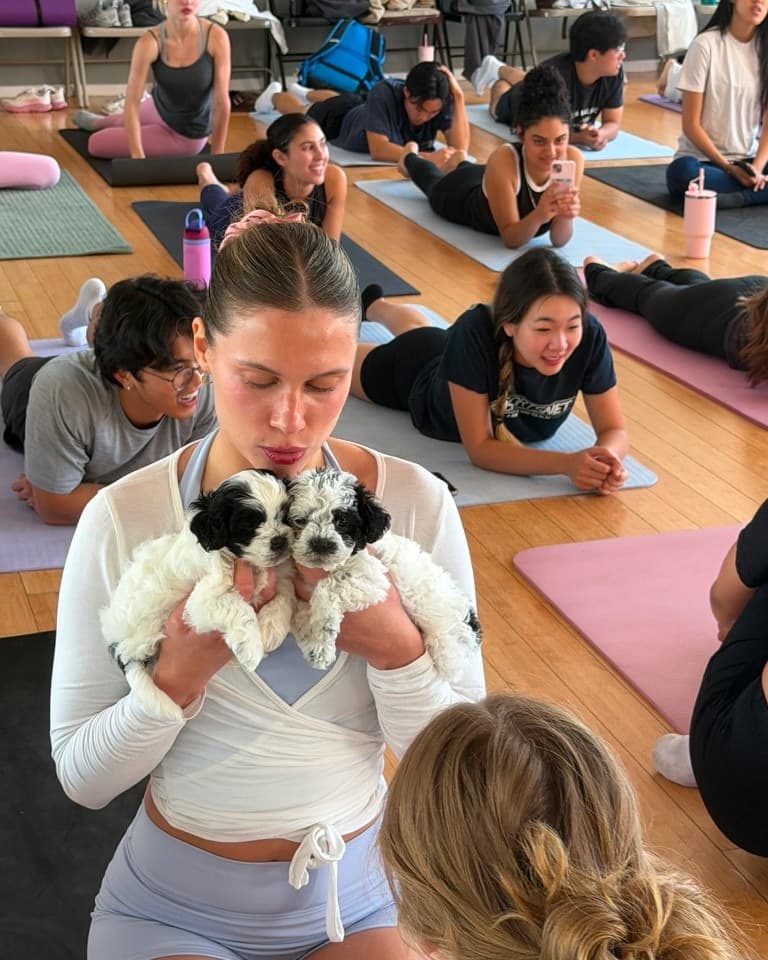
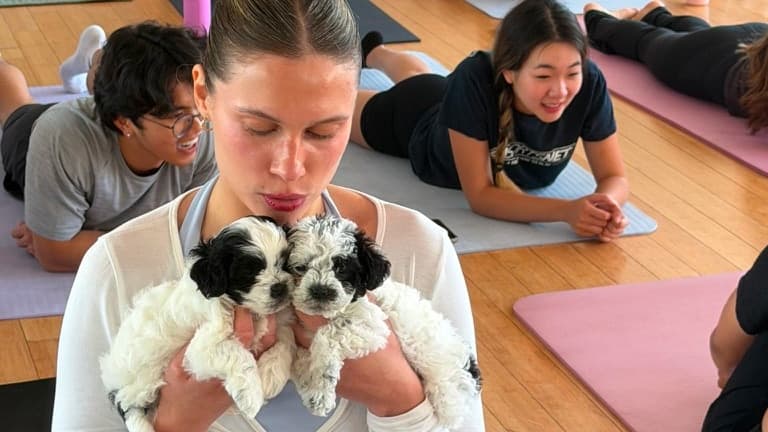
Where Do Puppy Yoga Puppies Come From?
A transparent guide to Puppy & Flow's screened breeder partners, puppy health review, supervision, rest, socialization, and permanent-home process.
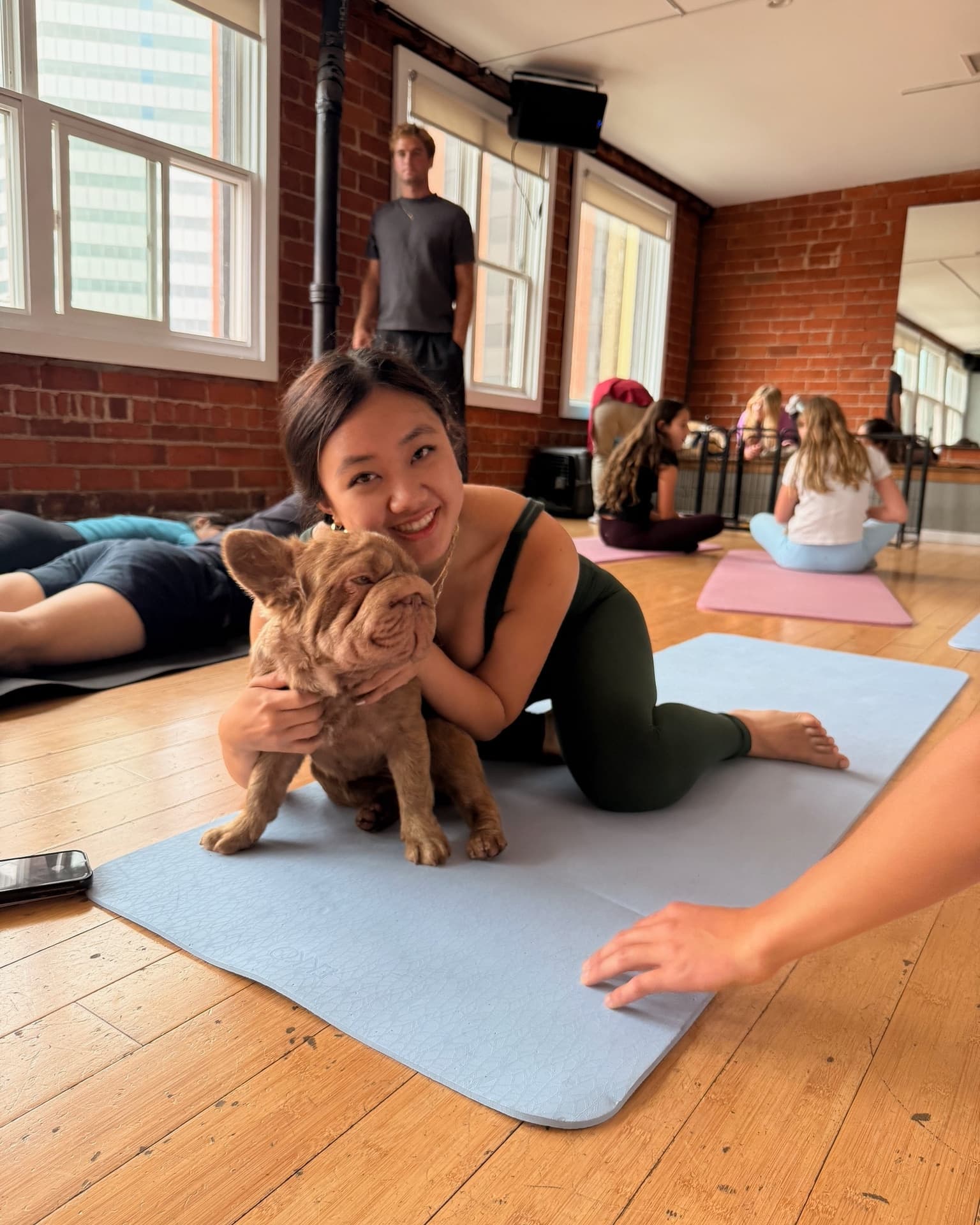
One of the most important questions to ask before booking puppy yoga is simple: where do the puppies come from?
At Puppy & Flow, puppies participate through carefully screened breeder partners. Those partners raise and care for the puppies before and after class, and the puppies remain under their caregivers’ responsibility throughout the experience. Puppy & Flow provides the controlled environment, trained staff, guest structure, and welfare procedures used during class.
That direct answer matters, but responsible puppy care also depends on what happens before, during, and after each session.
How Puppy & Flow screens each partnership
Before puppies participate, Puppy & Flow reviews relevant information about:
- Age and stage of development
- Health and vaccination status
- Temperament and individual needs
- Suitability for a supervised group environment
Working with known breeder partners provides continuity. The team can understand the puppies’ backgrounds, plan around their needs, and avoid introducing puppies whose health or temperament makes the experience inappropriate.
Puppy & Flow does not knowingly work with puppy mills or accept puppies without first confirming that they are healthy and appropriate for the experience.
What happens during class
The puppies’ health, comfort, and safety guide the structure of every session.
- Active supervision. Puppy & Flow staff and the puppies’ caregivers monitor the room and individual interactions.
- Clear guest guidance. Guests are told how to approach, hold, and interact with puppies gently and respectfully.
- Choice. Puppies can approach people, move away, play, or settle without being required to interact continuously.
- Rest and water. A separate area is available when a puppy needs to sleep, drink, or disengage from guests.
- Immediate intervention. If a puppy appears tired, overstimulated, uncomfortable, or stressed, participation is paused.
- Managed sessions. Class size, experience length, guest interaction, equipment, and sanitation are intentionally controlled.
A guest’s desire to hold or play with a puppy never comes before that puppy’s needs.
How controlled socialization can help
The class is designed to provide carefully managed, age-appropriate exposure to different people, voices, appearances, movements, sounds, surfaces, and everyday indoor activity.
Positive experiences in a controlled setting can support confidence around new people, comfort in unfamiliar environments, and preparation for the situations puppies may encounter after joining permanent homes.
That does not mean every interaction automatically benefits every puppy. Staff and caregivers monitor individual behavior and comfort, and the puppy’s response determines whether interaction continues.
Are any puppies looking for permanent homes?
Sometimes. Some participating puppies may be available to approved homes through their breeder partners.
If you meet a puppy you are interested in:
- Ask the Puppy & Flow team whether an introduction is appropriate.
- Speak directly with the breeder responsible for that puppy.
- Request the puppy’s health and availability information from the breeder.
- Review pricing, deposits, contracts, and placement requirements carefully.
- Make a calm long-term decision rather than relying only on the excitement of class.
Puppy & Flow can make an introduction, but the breeder handles availability, health information, pricing, contracts, placement decisions, and ownership transfer.
Questions guests are welcome to ask
Transparency is part of responsible practice. Before booking, guests can ask:
- Who remains responsible for the puppies during class?
- What information is reviewed before a puppy participates?
- Who supervises interaction?
- Where can puppies rest away from guests?
- What happens if a puppy appears tired or uncomfortable?
- How are guests instructed to interact?
The exact puppy lineup can change, but the care process should not be vague.
What guests can do to help
Puppy wellbeing is a shared responsibility during class. Guests can help by:
- Letting puppies approach first
- Following staff directions before picking up a puppy
- Avoiding chasing, cornering, waking, or feeding puppies
- Keeping phones and belongings out of puppy paths
- Giving sleeping or retreating puppies space
- Washing hands when asked
The best class is not the one where every guest holds a puppy every minute. It is one where interaction remains natural, supervised, and responsive to the puppies.
For the complete Puppy & Flow process, read Our Puppies & Their Care.
Ready to try puppy yoga?
Weekend classes in Westwood, Los Angeles. Current pricing and availability are shown before checkout.