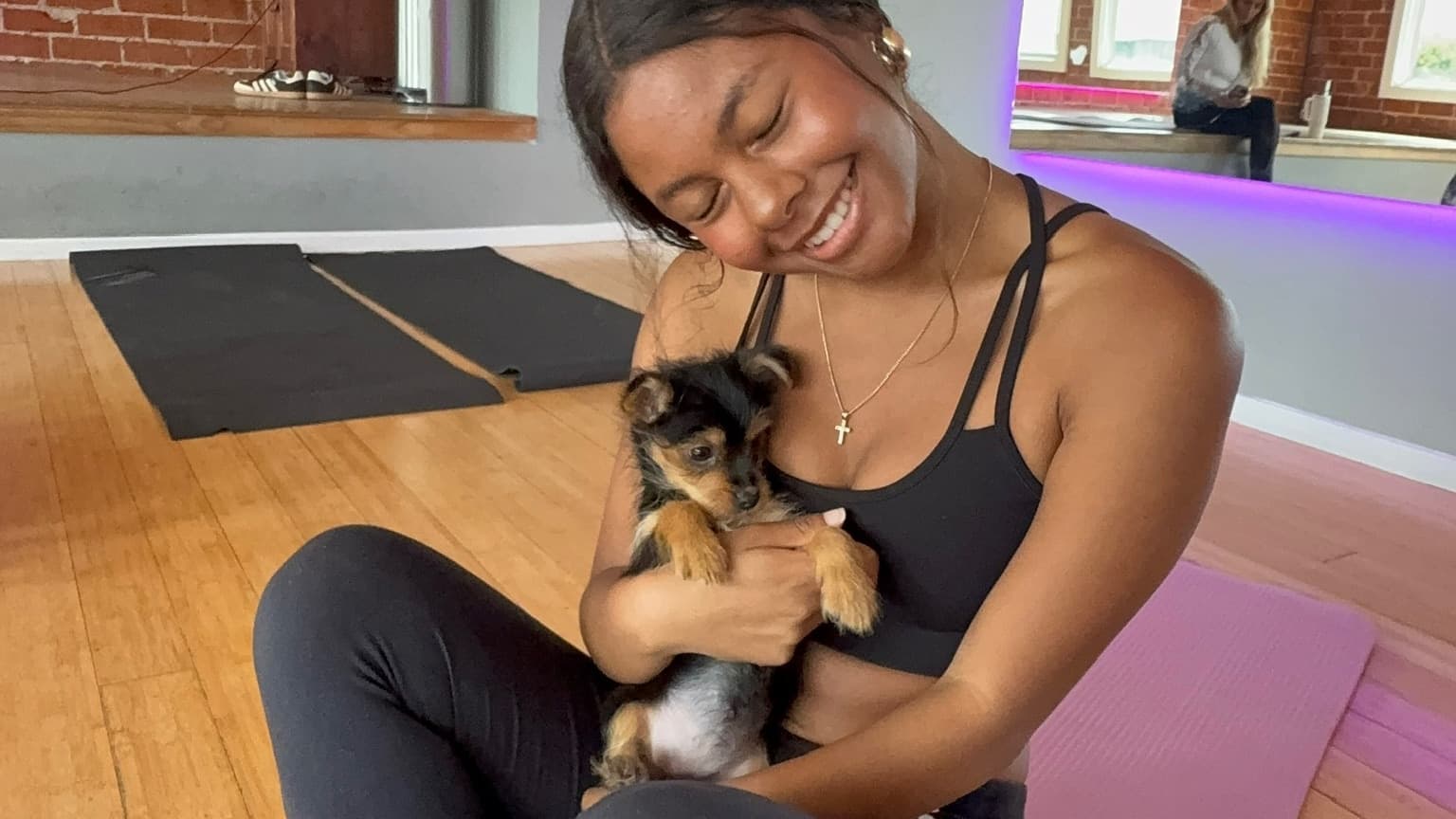
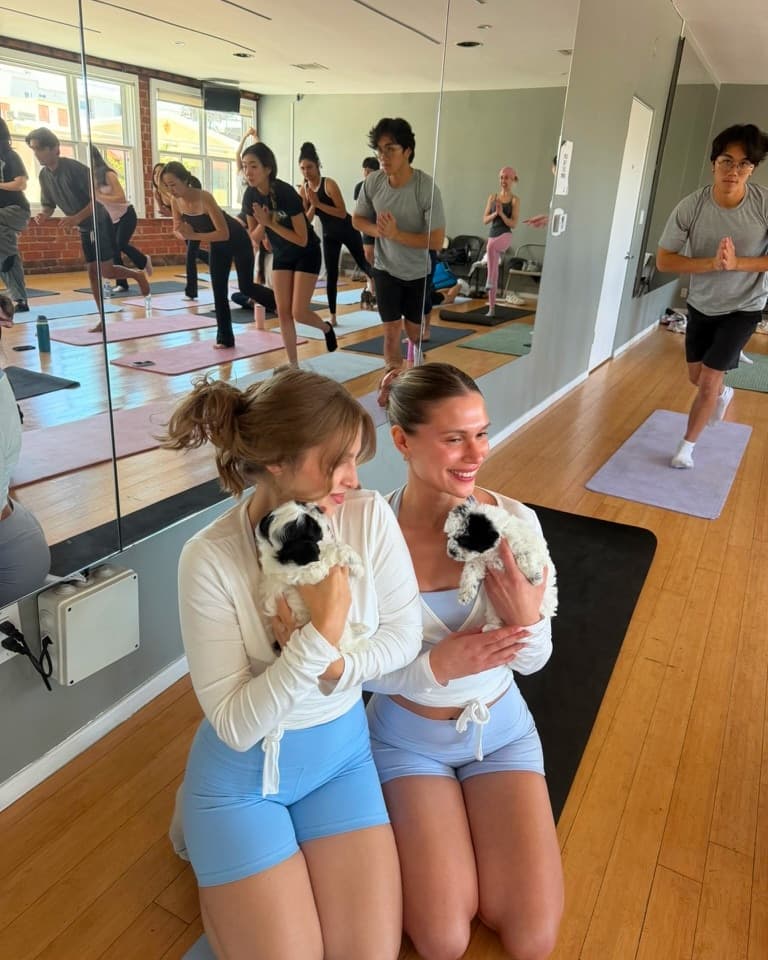
7 Possible Benefits of Puppy Yoga (Without the Hype)
Puppy yoga is not therapy or a medical treatment. Here are seven realistic reasons people may enjoy the mix of gentle movement, dogs, novelty, and social connection.
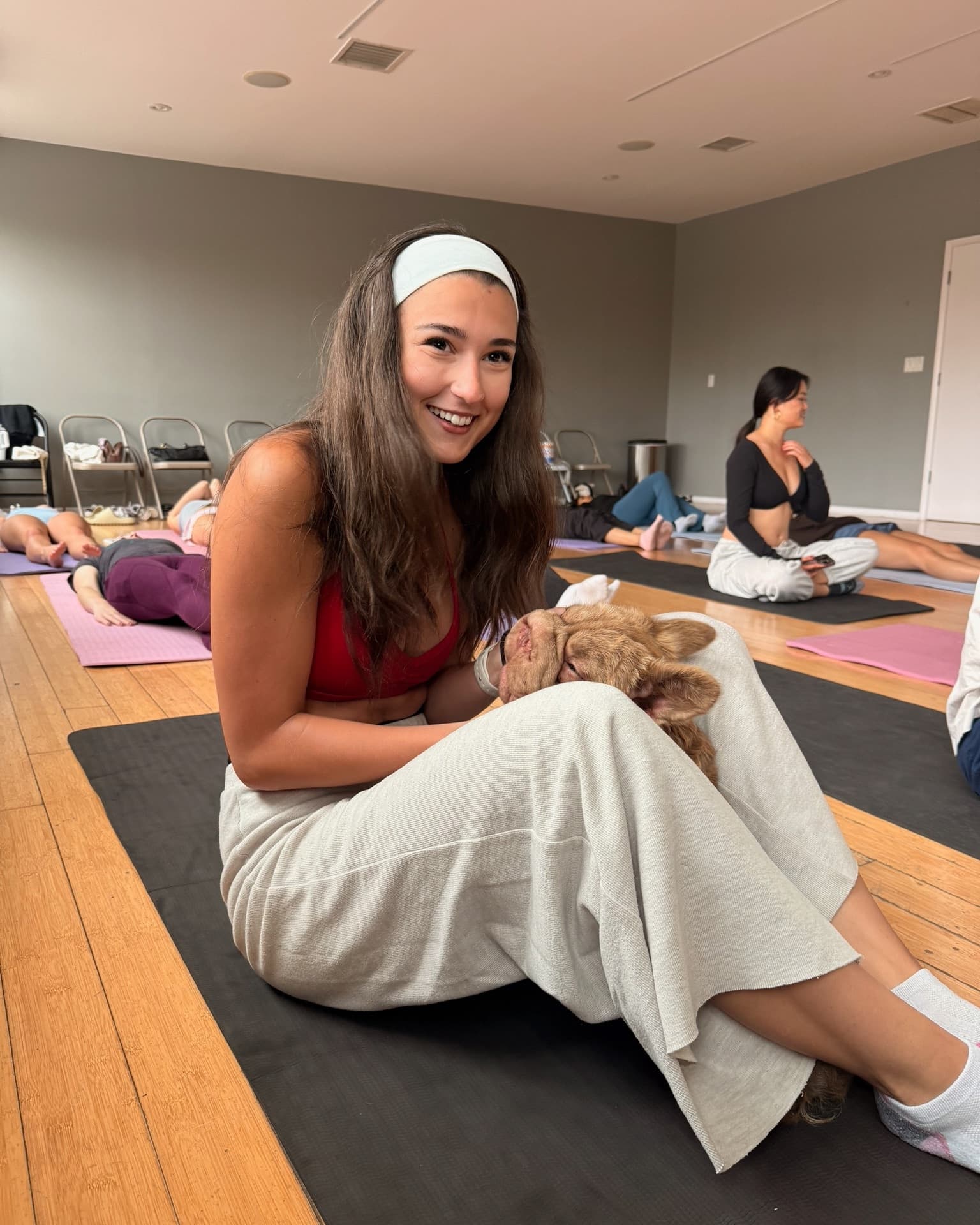
Puppy yoga can feel like a mood reset, but it is important to describe the benefits honestly. A public puppy yoga class is not psychotherapy, animal-assisted therapy, or medical care. Research on yoga and human-dog interaction can offer context, but it does not prove that one puppy yoga class will create a specific health outcome.
With that caveat, here are seven realistic reasons people may enjoy the experience.
1. It includes gentle movement
Yoga can combine movement, breathing, and attention in a way that many people find calming. A 2024 systematic review of randomized trials found evidence that yoga may reduce perceived stress in stressed adults, while also describing the evidence quality and limits. You can read the study summary on PubMed.
Puppy yoga is less continuous than a standard class, so it should not be treated as the same intervention. The puppies interrupt the flow, which can make the experience more approachable but less technically focused.
2. Time with a friendly dog may feel calming
Studies of structured dog interaction have reported changes in self-reported stress or stress-related measures in some groups. For example, a randomized study of university students found that therapy-dog exposure buffered a later stress response. The full study is available through PubMed Central.
That research involved therapy dogs in a controlled study—not free-moving puppies in a yoga class. It supports a reason to study human-dog interaction, not a promise that puppy yoga lowers everyone’s cortisol.
3. It makes movement feel less intimidating
People who feel self-conscious in a traditional class may find it easier to relax when nobody can maintain a perfect pose around playful animals. The shared interruptions shift attention away from performance.
That does not remove every barrier. Guests still need to decide whether the physical activity, live animals, noise, and allergy exposure are appropriate for them.
4. Novelty can pull attention into the moment
A new environment gives your brain something immediate to notice: the instructor’s cue, a puppy moving past the mat, or the sound of the room reacting together. That can make it harder to stay mentally stuck in the rest of the day.
The effect is simple and subjective. Puppy yoga is an experience, not a mindfulness treatment.
5. It creates easy social connection
Animal interaction gives friends, dates, and solo guests an obvious shared topic. You do not need to invent small talk when a puppy has just interrupted the whole row of mats.
For groups, that can make the event feel more inclusive than a highly competitive activity. People should still have the option not to hold or approach an animal.
6. It can add lightness to a weekend
Laughter, photos, and a playful environment are legitimate reasons to book an activity. Not every benefit needs a laboratory measurement.
Puppy yoga may be useful as a recreational break precisely because the goal is modest: move a little, interact respectfully, and enjoy an unusual hour.
7. It may be a low-pressure introduction to yoga
A first-time guest can learn how a mat-based class feels without entering an advanced or highly serious environment. Puppy & Flow is all-levels, mats are provided, and modifications are normal.
Someone who enjoys the movement may later try a standard yoga class with fewer interruptions. Someone who mainly enjoys the puppies can treat it as a one-time Los Angeles outing.
What puppy yoga cannot promise
Be skeptical of claims that puppy yoga:
- Treats anxiety or depression
- Replaces therapy
- Guarantees a cortisol reduction
- Provides the same benefit as an animal-assisted clinical intervention
- Is automatically good for every puppy
- Is safe for every person
Health outcomes depend on the person, the intervention, and the study. Animal welfare depends on the provider’s actual practices.
How to get the most from class
Choose a reputable provider, read the interaction rules, and arrive without demanding constant puppy attention. Let the animals approach, choose comfortable movement, and give yourself permission to pause.
Before booking, read what to expect at your first Westwood class and our ethical puppy yoga checklist. Those two guides are more useful than any exaggerated wellness claim.
Ready to try puppy yoga?
Weekend classes in Westwood, Los Angeles. Current pricing and availability are shown before checkout.